Commercial Property Clearance: Complete Guide for Businesses
When a business moves premises, closes down, refurbishes an existing property or needs to remove unwanted equipment and waste, commercial property clearance can make the process much easier.
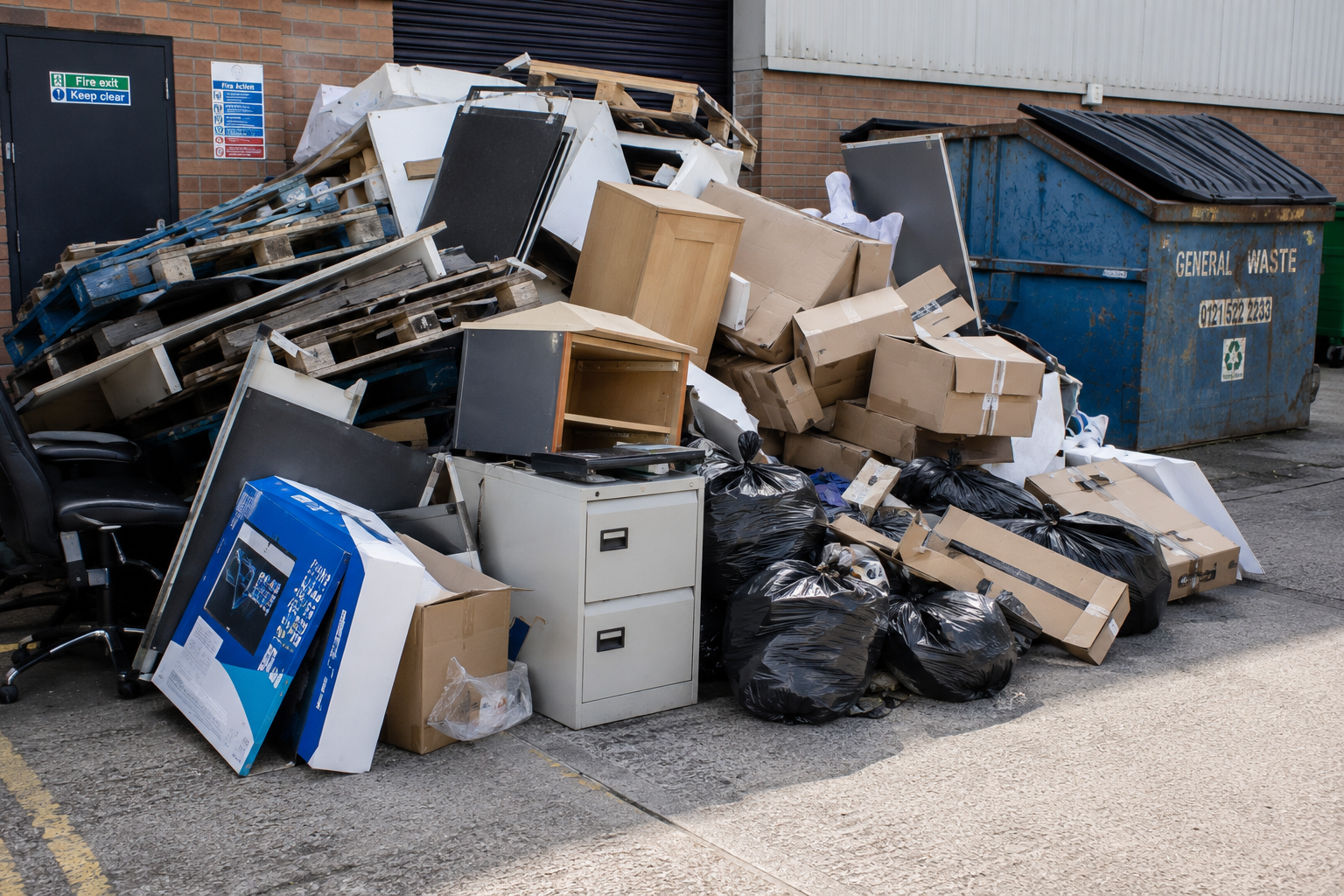
Clearing a commercial property is often more complicated than clearing a typical home. Offices, shops, warehouses, restaurants, workshops and other business premises can contain large quantities of furniture, equipment, packaging, fixtures and general waste.
A professional commercial clearance company can help businesses remove unwanted items efficiently while ensuring suitable materials are reused, recycled or disposed of responsibly.
What Is Commercial Property Clearance?
Commercial property clearance involves removing unwanted items and waste from business premises.
Depending on the property, this can include:
- Office furniture
- Desks and chairs
- Filing cabinets
- Shelving
- Computers and IT equipment
- Shop fittings
- Display units
- Warehouse equipment
- Stock and packaging
- Carpets and flooring
- Kitchen equipment
- Appliances
- General commercial waste
- Broken furniture
- Garden and external waste
Commercial clearance can cover an entire building or specific areas.
When Might a Business Need Commercial Clearance?
There are many situations where professional commercial property clearance may be required.
Moving Business Premises
Relocating can create a considerable amount of unwanted furniture, equipment and general waste.
Rather than transporting everything to the new premises, businesses can identify items they no longer need and arrange for them to be removed before the move.
Closing a Business
When a business closes, the property may need to be emptied before the lease ends or the premises are returned to the landlord.
A commercial clearance service can remove unwanted contents and help prepare the building for its next use.
Office Refurbishment
Office renovations often generate unwanted desks, chairs, cabinets, flooring and other materials.
Professional clearance can help remove these items so refurbishment work can proceed without unnecessary clutter.
End of Lease Clearance
Commercial leases often require premises to be returned in an agreed condition.
Depending on the lease, this may involve removing furniture, equipment, fixtures, rubbish and other items belonging to the business.
Always check the specific requirements of your lease before arranging clearance work.

What Types of Commercial Properties Can Be Cleared?
Professional commercial clearance services can be suitable for many different types of premises.
Office Clearance
Office clearance can include the removal of:
- Desks
- Office chairs
- Filing cabinets
- Shelving
- Storage units
- Computers
- Printers
- Kitchen appliances
- General office waste
Shop Clearance
Retail premises can contain substantial quantities of fittings and stock.
A shop clearance may involve:
- Display cabinets
- Shelving
- Counters
- Racking
- Signage
- Furniture
- Unwanted stock
- Packaging
- General waste
Warehouse Clearance
Warehouse clearance can involve larger and heavier items such as:
- Pallet racking
- Shelving
- Workbenches
- Pallets
- Packaging
- Stock
- Machinery
- Storage equipment
The size and weight of these items should be discussed when requesting a quotation.
Restaurant and Hospitality Clearance
Restaurants, cafés, pubs and other hospitality businesses may need unwanted equipment and furniture removed.
This could include:
- Tables and chairs
- Kitchen equipment
- Refrigeration units
- Shelving
- Counters
- Fixtures
- Appliances
- General waste
Specialist equipment may require additional planning for safe removal.
Commercial Office Clearance
Office clearance is one of the most common types of commercial property clearance.
Businesses can accumulate large amounts of furniture and equipment over time.
A professional office clearance can remove unwanted:
- Desks
- Chairs
- Filing cabinets
- Bookcases
- Storage units
- Computers
- Printers
- Telephones
- Kitchen equipment
- General office rubbish
If a business is moving to a smaller office, office clearance can also help reduce the amount of equipment and furniture that needs transporting.
What Happens to Commercial Waste?
Commercial waste should be handled appropriately.
Depending on the material and its condition, items collected during a commercial clearance may be:
- Reused
- Donated
- Recycled
- Recovered
- Disposed of through appropriate waste channels
Businesses should ask their clearance provider how commercial waste is handled and whether the service includes appropriate disposal arrangements.
Electrical and IT Equipment Clearance
Modern commercial properties can contain significant quantities of electrical equipment.
This may include:
- Computers
- Monitors
- Printers
- Servers
- Telephones
- Photocopiers
- Kitchen appliances
- Electrical office equipment
Electrical and electronic equipment may require specific handling and disposal arrangements.
If your business has a large amount of IT equipment, tell the clearance company in advance so the appropriate arrangements can be made.
Preparing for a Commercial Property Clearance
Good preparation can make a commercial clearance faster and more efficient.
1. Decide What Needs to Go
Create a list of furniture, equipment, stock and waste that needs removing.
Separate anything that is being transferred to another premises.
2. Secure Important Documents
Business records, contracts, financial paperwork and confidential documents should be removed or securely dealt with before clearance work begins.
3. Identify Valuable Equipment
Check whether any equipment or furniture should be sold or transferred rather than disposed of.
4. Identify Specialist Waste
Tell the clearance company about unusual, hazardous or specialist materials before work begins.
5. Provide Access Information
Explain:
- Parking arrangements
- Loading areas
- Access restrictions
- Stairs
- Lifts
- Security procedures
- Opening hours
- Restricted areas
This allows the clearance team to plan the work properly.
How Much Does Commercial Property Clearance Cost?
The cost of commercial property clearance depends on the individual job.
Factors that can affect the price include:
- Size of the premises
- Quantity of waste
- Type of items
- Weight of materials
- Number of workers required
- Accessibility
- Distance to the premises
- Loading requirements
- Specialist disposal requirements
- Number of vehicle loads
A small office clearance may be considerably less expensive than clearing a large warehouse containing heavy equipment and substantial quantities of waste.
For an accurate quotation, provide photographs, property details and information about the items that need removing.
Commercial Clearance vs Skip Hire
Businesses sometimes consider hiring a skip instead of using a commercial clearance service.
A skip can be useful when staff are able to load the waste themselves and the project will take place over several days.
A professional clearance service can be more convenient when the business wants the waste removed by a dedicated team.
The clearance team can load furniture, equipment and other unwanted materials, reducing the amount of manual work required from employees.
When comparing the options, consider labour, transport, disposal and the time your staff would spend loading a skip.
Why Use a Professional Commercial Clearance Company?
Professional commercial clearance can offer several practical advantages.
Saves Staff Time
Employees can concentrate on their normal responsibilities rather than spending hours moving furniture and waste.
Reduces Disruption
An organised clearance can help businesses prepare premises for a move, refurbishment or handover.
Handles Bulky Items
Large desks, cabinets, shelving and other commercial items can be difficult to move without suitable equipment and vehicles.
Supports Responsible Disposal
A professional company can arrange appropriate handling of recyclable and unwanted materials.
One Service for Multiple Areas
A commercial clearance provider may be able to clear offices, warehouses, shops, garages, external areas and other parts of a business property.
Commercial Property Clearance for Landlords
Commercial landlords may require clearance services when a tenant leaves a property.
Abandoned furniture, equipment, stock and rubbish can prevent the premises from being prepared for the next tenant.
A commercial property clearance service can help remove unwanted contents and leave the building ready for cleaning, repairs, refurbishment or reletting.
Landlords should ensure that they have the appropriate authority to remove items belonging to former tenants before arranging clearance.
Commercial Property Clearance for Estate Agents
Estate agents and property managers may also need clearance services when preparing commercial premises for sale or letting.
An empty and tidy property can be easier to inspect and prepare for marketing.
Clearance may involve removing:
- Old furniture
- Abandoned equipment
- Rubbish
- Fixtures
- Stock
- Office contents
- Garden waste
How Long Does Commercial Clearance Take?
The time required depends on the size and complexity of the property.
A small office containing a limited amount of furniture may be cleared relatively quickly.
A large warehouse, retail unit or multi-floor commercial property can require considerably more time, particularly when there are heavy items, restricted access or large quantities of waste.
When requesting a quotation, provide as much information as possible so the company can estimate the labour and vehicle requirements.
Questions to Ask Before Booking Commercial Clearance
Before choosing a clearance company, ask:
- What does the quotation include?
- Is loading included?
- Are disposal charges included?
- Do you remove office furniture?
- Can you clear warehouses and shops?
- Do you handle electrical equipment?
- Can you remove bulky items?
- Do you recycle suitable materials?
- Are there additional charges for difficult access?
- Can you provide a written quotation?
- What areas do you cover?
Getting clear answers before work begins can help prevent unexpected costs.
Commercial Property Clearance Checklist
Use this checklist when preparing your business premises:
- Decide what needs to be removed.
- Separate items being moved to another property.
- Remove confidential paperwork.
- Identify valuable equipment.
- Separate reusable items where appropriate.
- Identify specialist or unusual waste.
- Check access and parking.
- Tell the clearance company about stairs and lifts.
- Photograph the property if requesting a quotation.
- Confirm what the quotation includes.
- Arrange suitable access for the clearance team.
- Check the premises after the clearance is complete.
Frequently Asked Questions
What is commercial property clearance?
Commercial property clearance involves removing unwanted furniture, equipment, stock, rubbish and other contents from business premises such as offices, shops, warehouses and commercial units.
Can you clear an office?
Professional clearance companies can often remove desks, chairs, cabinets, shelving, appliances, IT equipment and other unwanted office contents.
Can a warehouse be cleared?
Yes. Warehouse clearance can include the removal of shelving, racking, pallets, stock, packaging, equipment and other unwanted materials. Heavy or large items should be identified when requesting a quotation.
Can commercial clearance include shop fittings?
Many commercial clearance services can remove shop fittings such as shelving, display units, counters and other unwanted fixtures. Confirm the exact items accepted before booking.
How much does commercial property clearance cost?
Prices vary according to the size of the premises, amount and type of waste, accessibility, labour requirements and disposal arrangements. A quotation based on the individual property is the best way to establish the cost.
Can electrical equipment be removed?
Many clearance companies can collect electrical and electronic equipment, although specific disposal and recycling requirements may apply.
What happens to furniture after commercial clearance?
Depending on its condition and type, furniture may be reused, donated, recycled or disposed of through appropriate waste channels.
Can landlords arrange commercial property clearance?
Yes. Commercial landlords may arrange clearance when they are legally entitled to remove unwanted items from premises following a tenancy.
Conclusion
Commercial property clearance can help businesses, landlords, property managers and commercial property owners deal with unwanted furniture, equipment, stock and waste efficiently.
Whether you are moving offices, closing a business, refurbishing a shop, clearing a warehouse or preparing commercial premises for a new tenant, professional clearance can save time and reduce the amount of work required from your staff.
Before booking, make a clear list of what needs removing, identify any specialist materials and provide accurate information about access and the size of the clearance. A reputable commercial clearance company can then provide a quotation based on your specific requirements.
From office clearance and shop clearance to warehouse clearance and commercial rubbish removal, professional support can make the entire process more straightforward.